
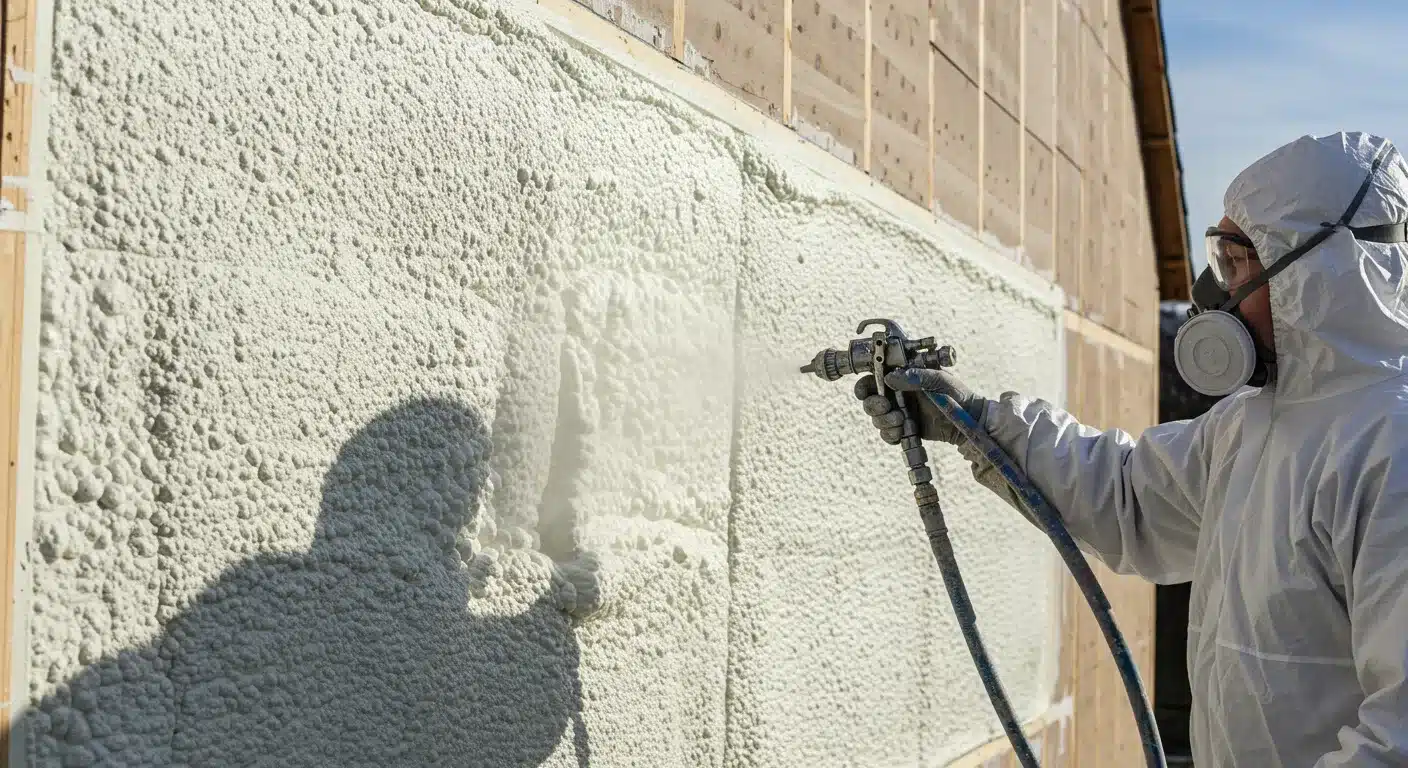
Spray foam insulation is widely recognized for its ability to provide a seamless air barrier, moisture resistance, and high R-value. While commonly used for attics, crawl spaces, and interior walls, it is increasingly being applied to exterior walls as well. Understanding its advantages, limitations, and best practices can help determine if it is the right choice for your project.
Spray foam insulation comes in two primary types:
Closed-cell spray foam is generally recommended for exterior walls because of its water resistance, strength, and insulating properties.
Spray foam has a high R-value per inch, making it one of the most effective insulation materials. Closed-cell foam typically offers R-6 to R-7 per inch, providing better thermal resistance compared to fiberglass or cellulose.
Exterior walls are exposed to weather conditions that can cause moisture infiltration and energy loss. Spray foam creates an airtight seal, reducing the risk of mold growth and moisture-related damage.
Closed-cell spray foam enhances the structural integrity of walls by adding rigidity. This makes it particularly beneficial in areas prone to strong winds or extreme weather.
Unlike traditional insulation materials, spray foam does not settle over time. It retains its effectiveness for decades, reducing maintenance costs.
Spray foam insulation is more expensive upfront than traditional options. However, its energy savings and longevity often justify the investment.
Applying spray foam to exterior walls requires expertise. It must be sprayed evenly and in the right thickness to achieve the best results.
When using spray foam on exterior walls, it’s important to ensure compatibility with siding materials. Some siding types may require additional ventilation or protective barriers.
For homeowners and builders looking for a high-performance insulation solution, spray foam offers substantial benefits. While the initial cost is higher, the energy efficiency and durability make it a valuable long-term investment. If reducing heating and cooling costs and improving structural integrity are priorities, closed-cell spray foam is an excellent choice for exterior walls.
If you’re exploring insulation options for exterior walls, Albone’s Spray Foam provides expert consultation and professional installation services. Contact us at (585) 560-1369 or visit https://albonesprayfoam.com/ to learn more about how spray foam can improve your building’s efficiency.
Yes, closed-cell spray foam can be applied directly to exterior walls, providing insulation, air sealing, and moisture resistance.
In most cases, spray foam works well with different types of siding. However, some siding materials may require additional ventilation to prevent moisture buildup.
Spray foam insulation can last 30 years or more when properly installed and protected from UV exposure.
Yes, but it requires removing the outer cladding or drilling access holes to apply the foam inside the wall cavity.
Yes, closed-cell spray foam adds structural strength to walls, making them more resistant to wind and impact damage.
Spray foam offers superior air sealing, higher R-value, and moisture resistance compared to fiberglass or cellulose insulation.
Many modern spray foam products are formulated with environmentally friendly blowing agents and can contribute to energy savings, reducing overall carbon footprint.
Yes, but it should be coated with a UV-resistant paint or a protective barrier to prevent degradation from sunlight exposure.
Spray foam is best applied in moderate weather conditions to ensure proper adhesion and expansion. Extreme temperatures can affect the curing process.
The cost varies based on wall size, foam thickness, and project complexity. Contact Albone’s Spray Foam at (585) 560-1369 for a detailed estimate.synthetics can improve soil drainage and resilience, making them effective for flood-prone regions.
Welcome to Albone’s Spray Foam, the premier insulation experts catering to the needs of the Rochester, NY region. With a decade of unparalleled experience in the industry, our company has etched its name as a leader in providing superior insulation services.