
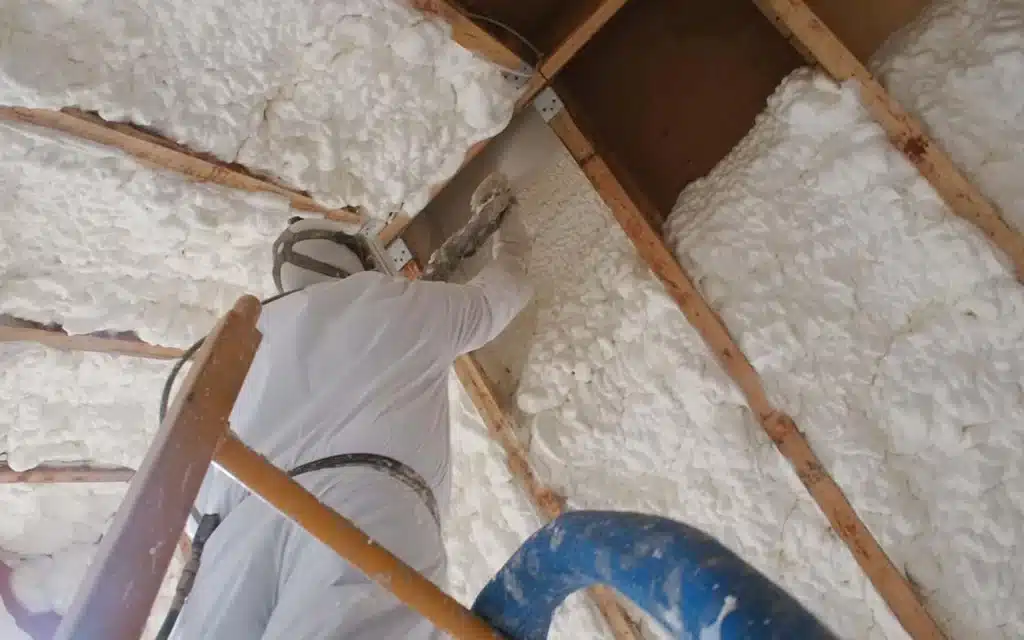
Spray foam insulation is a highly effective material used to create airtight seals in residential and commercial buildings. Unlike traditional insulation options like fiberglass or cellulose, spray foam expands upon application, filling gaps and preventing air leakage. By addressing uncontrolled airflow, this insulation method significantly improves energy efficiency, indoor air quality, and overall comfort.
Air leaks occur when gaps or cracks in a building allow conditioned air to escape while letting in unfiltered outside air. These leaks contribute to higher energy bills and temperature inconsistencies. Common problem areas include:
Unsealed leaks force heating and cooling systems to work harder, leading to increased energy consumption. Addressing these leaks with an effective insulation solution is crucial for optimizing energy performance.
Spray foam insulation is made of two liquid components that mix at the point of application, triggering a chemical reaction that causes expansion. This expansion allows the foam to fill even the smallest cracks and crevices, ensuring a seamless barrier against air infiltration.
There are two main types of spray foam insulation:
Both options effectively seal air leaks and improve a building’s energy efficiency, but the choice depends on specific project needs.
By forming an airtight seal, spray foam minimizes heat transfer and reduces the load on HVAC systems. Key energy-saving benefits include:
With fewer air leaks, less energy is required to maintain indoor temperatures. Homeowners and business owners typically see a reduction in utility bills after installing spray foam insulation.
Spray foam prevents hot or cold spots by evenly distributing insulation throughout a space. This leads to better comfort levels in every room.
Unlike other insulation materials, closed-cell spray foam resists moisture infiltration. This helps prevent mold growth, wood rot, and structural damage caused by excessive humidity.
Spray foam does not settle, degrade, or lose effectiveness over time. A properly installed spray foam system can last for decades without needing replacement or maintenance.
Beyond energy savings, spray foam plays a significant role in enhancing indoor air quality. Air leaks allow dust, pollen, mold spores, and other allergens to enter a home. By sealing these gaps, spray foam reduces exposure to airborne irritants, benefiting those with allergies or respiratory conditions.
Additionally, closed-cell spray foam can block harmful pollutants such as exhaust fumes, radon gas, and volatile organic compounds (VOCs) from entering the living space.
Spray foam insulation is suitable for various applications, including:
Professional spray foam installation involves a few key steps:
Working with experienced professionals ensures safe and effective application, as improper installation can result in wasted material and suboptimal performance.
At Albone’s Spray Foam, we specialize in high-quality spray foam insulation services that help homeowners and businesses reduce energy waste. Our team ensures a precise application that delivers maximum air-sealing benefits. For a consultation, call (585) 560-1369 or email [email protected].
Many homeowners report energy savings of 20-50% after installing spray foam, depending on the level of air leakage in their home before installation.
Yes. Once cured, spray foam does not emit harmful chemicals. Additionally, it prevents outside pollutants from entering the space, improving indoor air quality.
Yes. Spray foam can be applied to attics, basements, walls, and crawl spaces in both new and existing homes.
Properly installed spray foam insulation can last several decades without losing effectiveness.
Yes. Open-cell spray foam is particularly effective at reducing airborne noise transmission.
Closed-cell spray foam is moisture-resistant, helping to prevent mold growth in damp areas like basements and crawl spaces.
Open-cell foam is lighter and provides better soundproofing, while closed-cell foam is denser, offers more structural support, and acts as a moisture barrier.
Professional installation is recommended to ensure proper application, safety, and long-term performance.
It is typically safe to return 24 hours after installation to allow for full curing and off-gassing.
Yes. Energy-efficient homes with spray foam insulation often attract higher resale values due to reduced utility costs and improved comfort.
Welcome to Albone’s Spray Foam, the premier insulation experts catering to the needs of the Rochester, NY region. With a decade of unparalleled experience in the industry, our company has etched its name as a leader in providing superior insulation services.